
Mariaoord Procession Park
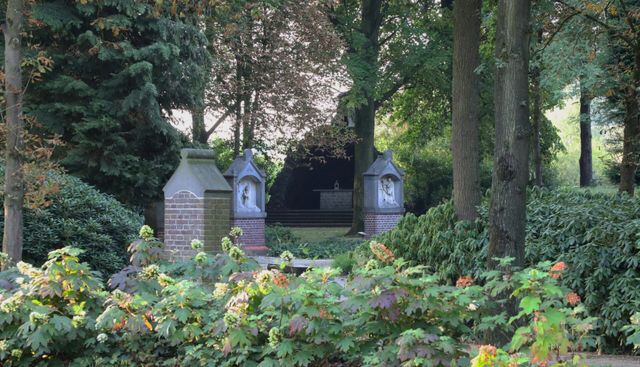
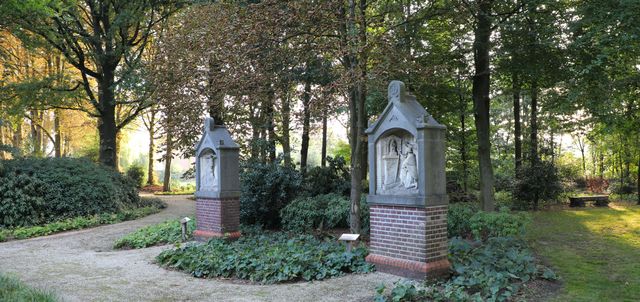
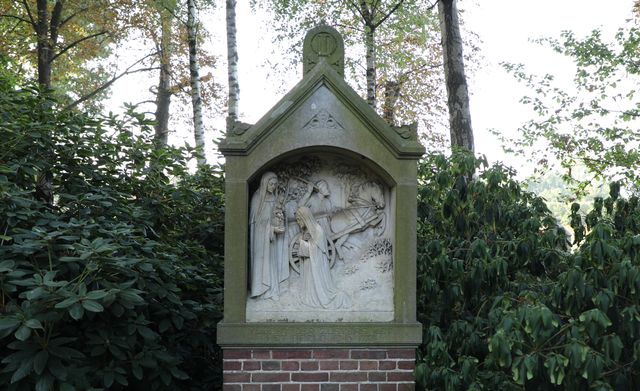
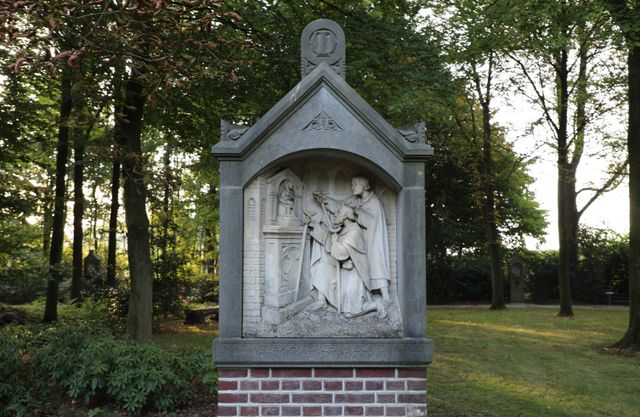
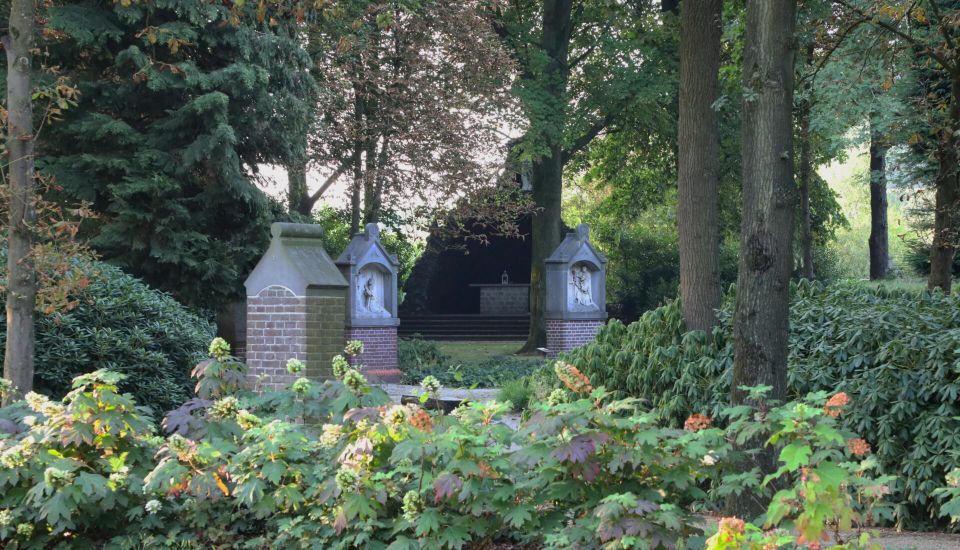
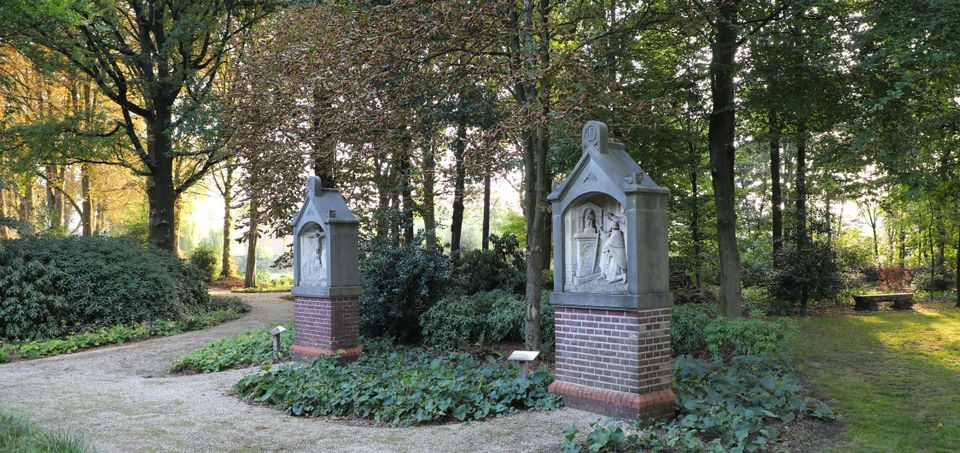
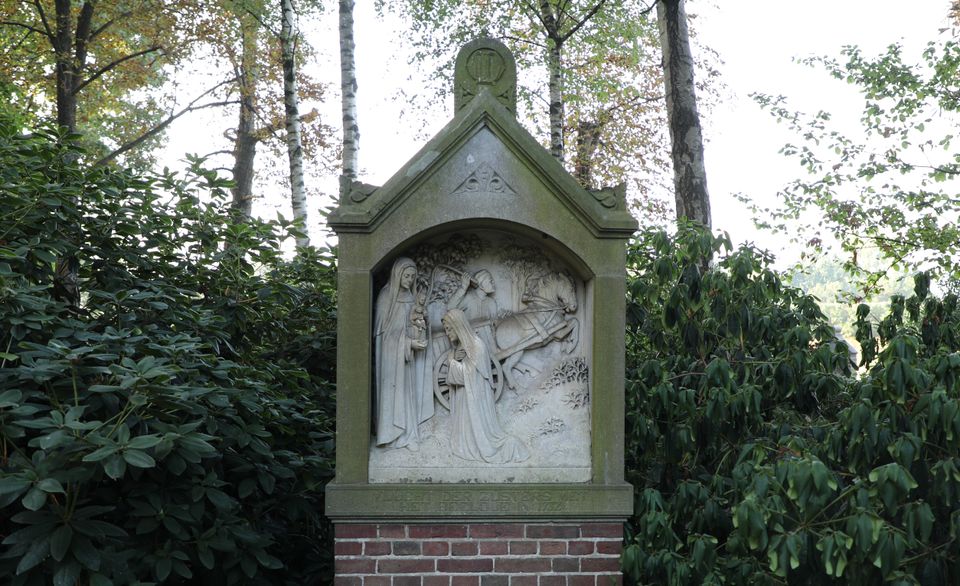
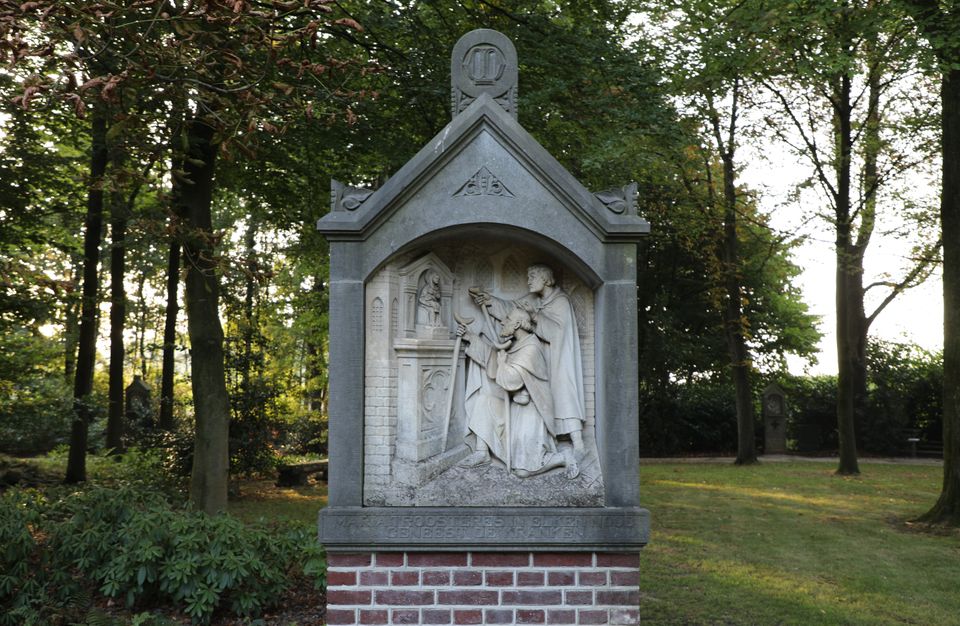
The Procession Park features 14 Stations of the Cross, 6 pilgrimage chapels, a Calvary and a Marian grotto. The six chapels depict the history of the Ommel Marian statue; each one is a unique work of art carved from sandstone. In the adjacent church stands an ivory statue of the Virgin Mary that has been on display in Ommel since the year 1400. The six chapels and the Calvary are both listed as national monuments.
Every year in May, around 50,000 people visit the statue of ‘Our Lady with Child’, which can be seen in the church of Ommel next to the procession park.
Next to and behind the church lies the ‘Mariaoord Ommel Procession Park’. This park was laid out in 1914 because so many pilgrims were coming to Ommel that the church had become too small.
The proce…
The Procession Park features 14 Stations of the Cross, 6 pilgrimage chapels, a Calvary and a Marian grotto. The six chapels depict the history of the Ommel Marian statue; each one is a unique work of art carved from sandstone. In the adjacent church stands an ivory statue of the Virgin Mary that has been on display in Ommel since the year 1400. The six chapels and the Calvary are both listed as national monuments.
Every year in May, around 50,000 people visit the statue of ‘Our Lady with Child’, which can be seen in the church of Ommel next to the procession park.
Next to and behind the church lies the ‘Mariaoord Ommel Procession Park’. This park was laid out in 1914 because so many pilgrims were coming to Ommel that the church had become too small.
The procession park features an offering box, a Calvary, a Lourdes grotto, fourteen Stations of the Cross and six pilgrimage chapels. Together, they form two listed monuments.
The pilgrimage chapels are built in the Neo-Gothic style and are arranged in a circle around Calvary. The depictions in the niches of the chapels are collectively known as the ‘Miracle of Ommel’ and depict the history of the statue of ‘Mary, Comforter in Every Distress’.
Calvary Hill stands at the centre of the park and is a reference to the place where Jesus Christ was crucified and died. Surrounding Calvary are the so-called Stations of the Cross. These were created in 1914 in the Neo-Gothic style. Through 14 sculptures, the Stations of the Cross recount the suffering endured by Jesus, from his condemnation right up to the moment of his death and his removal from the cross. For many people, Calvary and the Stations of the Cross are reminders of the love of God, who gives himself. They make this visually clear even in our time. The Stations of the Cross also serve as signposts in the life of faith. Walking and praying past these images can be a valuable form of prayer and inspiration.
The Lourdes Grotto is a structure that commemorates events in France in the 19th century. Mary appeared to 14-year-old Bernadette Soubirous from the village of Lourdes at a grotto. Lourdes is one of the best-known and largest Catholic pilgrimage sites. The presence of the Lourdes Grotto in Ommel connects the pilgrimage site of Ommel with all the places in the world where people pray to Mary and where God, through Mary, cares for people.
The Offering Box is situated at the foot of Calvary Hill. It consists of a small brick box on a bluestone base. On the front, the box has a natural stone slab, with a small opening for donations and the following inscription: ‘YOU PILGRIMS WHO ENTER THIS PLACE, WHOEVER YOU MAY BE AND WHATEVER YOUR NAME, YOU WHO ARE ALL DEVOTED IN HEART, CONTINUE TO LOVE MARY AND GIVE YOUR GIFT WITH A GENEROUS HAND, SO THAT MARY’S PLACE MAY BE PRESERVED’.
In 2022 and 2023, a local initiative ensured that the procession park, with its greenery and paths, was completely renovated. The Lourdes Grotto has also been restored to its former glory. On 21 May 2023, Bishop Gerard de Korte blessed the park and officially reopened it.
Guided tours are available on request. Please email to book and for further information at winkel@toeristisch-asten.nl