
Residences Monseigneur den Dubbeldenstraat
Contact
5721AD Asten Plan your route to Residences Monseigneur den Dubbeldenstraat
The present-day Mgr. Den Dubbeldenstraat has a long history and has undergone several name changes. This street was once called Nieuwe Kerkstraat, then Prins Hendrikstraat, before finally being given its current name, named after Henricus den Dubbelden. Henricus was born at number 9 on this street in late 1769. He became a priest, rose through the ranks of the church hierarchy and was appointed Bishop of ’s Hertogenbosch in 1842.
From old house to new development (before 1883 – 1900)
Until 1883, an older house stood on the plot at 4–8 Mgr. Den Dubbe…
The present-day Mgr. Den Dubbeldenstraat has a long history and has undergone several name changes. This street was once called Nieuwe Kerkstraat, then Prins Hendrikstraat, before finally being given its current name, named after Henricus den Dubbelden. Henricus was born at number 9 on this street in late 1769. He became a priest, rose through the ranks of the church hierarchy and was appointed Bishop of ’s Hertogenbosch in 1842.
From old house to new development (before 1883 – 1900)
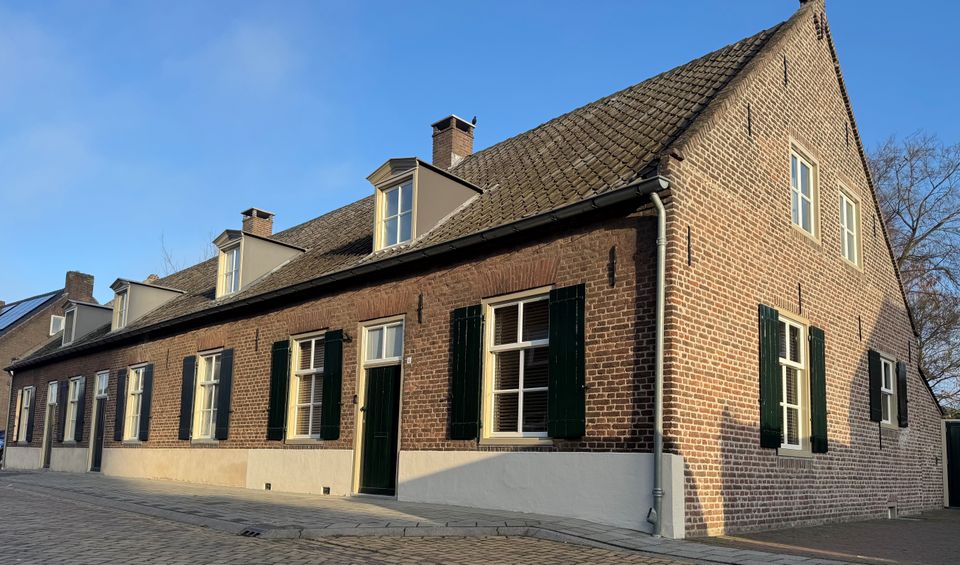
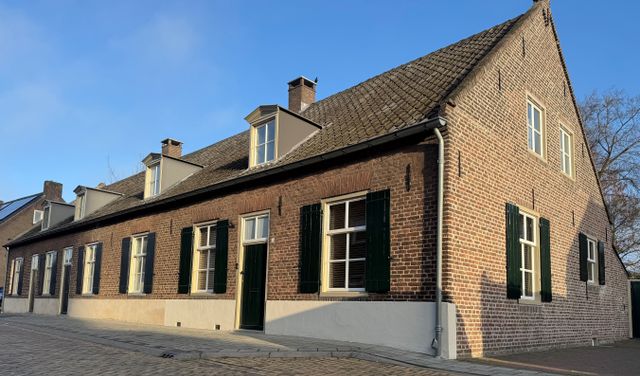
Until 1883, an older house stood on the plot at 4–8 Mgr. Den Dubbelenstraat, set quite far back on the property. That year, it was demolished and replaced by a new residential house. This house was situated closer to the street and came into the possession of Franciscus Hoebens, the head teacher. He intended to house boarding school pupils there, but this plan did not go ahead. Around 1900, the property was divided into three separate dwellings, numbers 4, 6 and 8. The continuous gable roof still reveals that it was originally a single house.
From 1900 onwards, a striking number of residents from outside Asten moved into these three properties. Asten’s growing industry and economy made the village attractive to civil servants and entrepreneurs who were transferred here or chose to settle here. Among the residents of these houses were, for example, people from Amsterdam, Utrecht, Heerlerheide, Batenburg, Vaals, Veghel, Vught, Boxtel and Rijsbergen. Resident Johannes Rijsdijk was born in Beetsterzwaag. He came to Asten as director of the iron foundry. Later, he moved into Willem Bluijssen’s villa on Burgemeester Wijnenstraat. Jan Vaalman, born in Oldebroek, also lived here with his family. He was a grain merchant and sales representative for the steam mill. His daughter Anny later opened a chemist’s shop on Burgemeester Wijnenstraat in the former magistrates’ court. This group of residents reflects the dynamism of Asten around 1900: a village in the midst of rapid development. Buildings 4, 6 and 8 together form a listed building.