
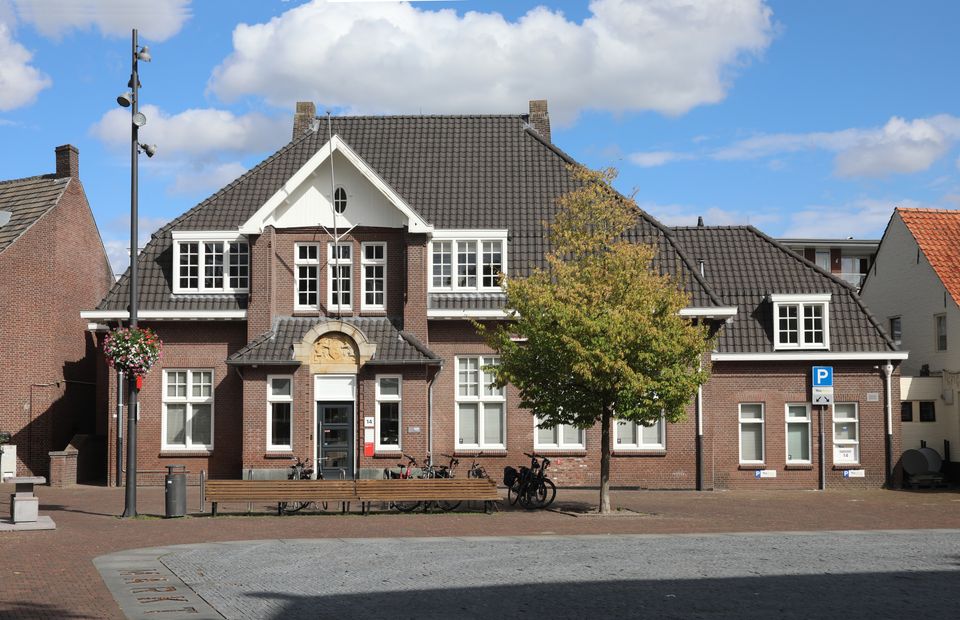
Former post office
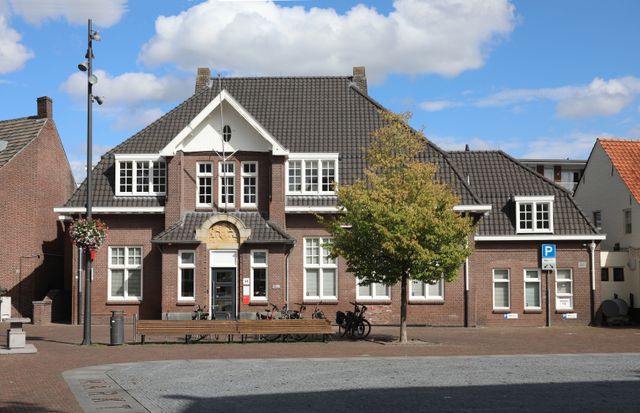
On the Markt (formerly called Market field), directly opposite the town hall, stands the former post office of Asten. The stately building, dating from 1920, is still recognisable today by the bluestone relief above the entrance, in which the Dutch coat of arms is carved. But behind this site lies a much older and surprisingly vivid history.
Hotel Sengers: what happened before
Until 1911, Hotel Sengers stood on this site. The Sengers family put the hotel up for sale on several occasions from 1908 onwards. It was not until a few years later that the municipality of Asten purchased it and immediately demolished the hotel, with the plan to build a new town hall and mayor’s residence.
However, the purchase and d…
On the Markt (formerly called Market field), directly opposite the town hall, stands the former post office of Asten. The stately building, dating from 1920, is still recognisable today by the bluestone relief above the entrance, in which the Dutch coat of arms is carved. But behind this site lies a much older and surprisingly vivid history.
Hotel Sengers: what happened before
Until 1911, Hotel Sengers stood on this site. The Sengers family put the hotel up for sale on several occasions from 1908 onwards. It was not until a few years later that the municipality of Asten purchased it and immediately demolished the hotel, with the plan to build a new town hall and mayor’s residence.
However, the purchase and demolition of the hotel led to fierce protests in the village and letters to the editor in the newspaper. The costs turned out to be 15,000 guilders higher than expected, an unreasonably high expense. The site remained derelict.
From derelict site to post office
In 1918, the municipality donated the site to the State Enterprise for Post, Telegraph and Telephone (PTT). The new post office opened in 1920. Post office clerk Cornelius Bartels and his family moved from the old post office on Koningsplein to the residence within the new building.
Markt 14–16 tells the story of a place steeped in history and a listed building that continues to define the streetscape to this day.
Did you know?
In the past, you had to queue up in a long line to buy a stamp at the post office.