
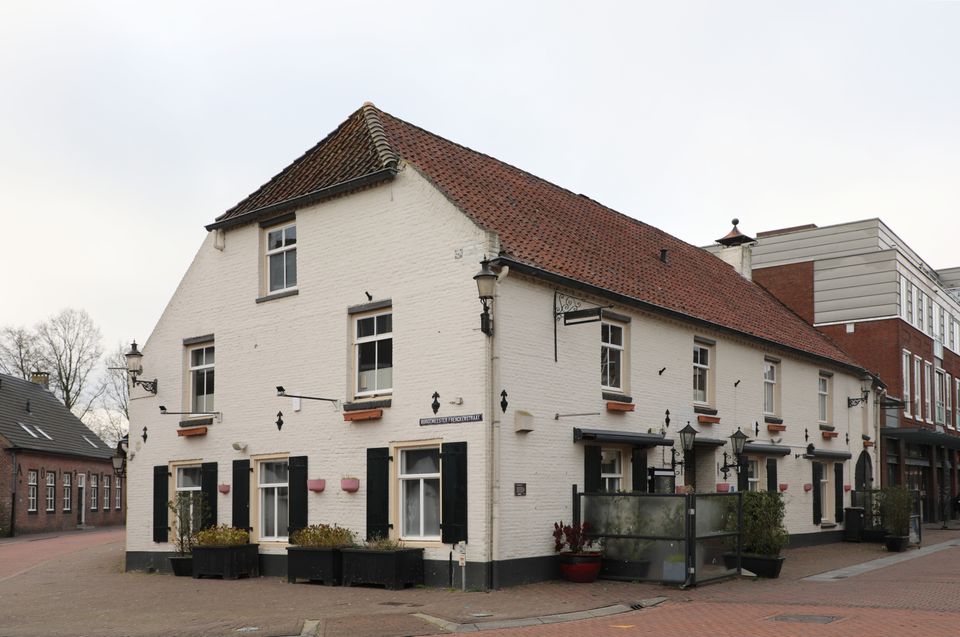
Large residence
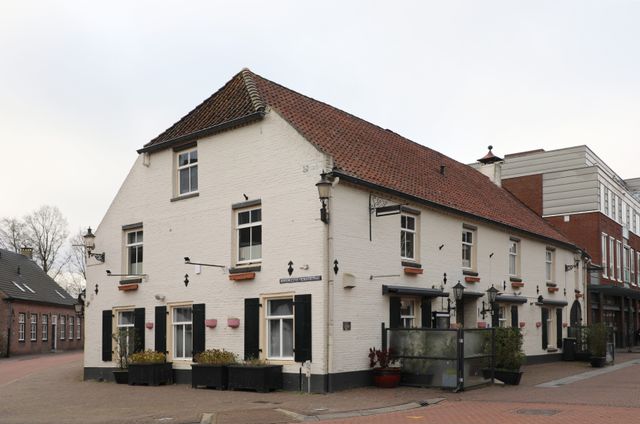
This building on what is now Prins Bernhardstraat (formerly Tramstraat and, before that, Ommelscheweg) is one of the oldest and most distinctive buildings in Asten. It was built around 1750 and, over the centuries, has served a variety of purposes, often in conjunction with the building around the corner at Burg. Frenckenstraat 2, which was owned by the same proprietor.
In the early 19th century, David Horn, originally from Germany, established a cotton mill there, an early form of industry in Asten. The cotton mill remained in operation until 1856, but stood empty for over 20 years thereafter. David himself lived for a long time in the building at 47 Burg. Frenckenstraat, diagonally opposite.
In 1879, the property came into t…
This building on what is now Prins Bernhardstraat (formerly Tramstraat and, before that, Ommelscheweg) is one of the oldest and most distinctive buildings in Asten. It was built around 1750 and, over the centuries, has served a variety of purposes, often in conjunction with the building around the corner at Burg. Frenckenstraat 2, which was owned by the same proprietor.
In the early 19th century, David Horn, originally from Germany, established a cotton mill there, an early form of industry in Asten. The cotton mill remained in operation until 1856, but stood empty for over 20 years thereafter. David himself lived for a long time in the building at 47 Burg. Frenckenstraat, diagonally opposite.
In 1879, the property came into the hands of the Leenen family, who ran a thriving business there selling coal, cigars, tobacco, colonial goods and vegetables. Leenen sold his goods as far afield as Scotland. The tall tower next to the building — a remnant of the old spinning mill — was used to dry vegetables. According to tradition, schoolchildren were also put to work there.
In the 20th century, the building was divided. Dr Schellekens set up his surgery at 2 Burg. Frenckenstraat. The northern section on the square was converted into a restaurant called ‘In ’t Eeuwig Leven’, named after a part of De Groote Peel. The square, where a village pump once stood, is named after this. The building is a listed monument.