

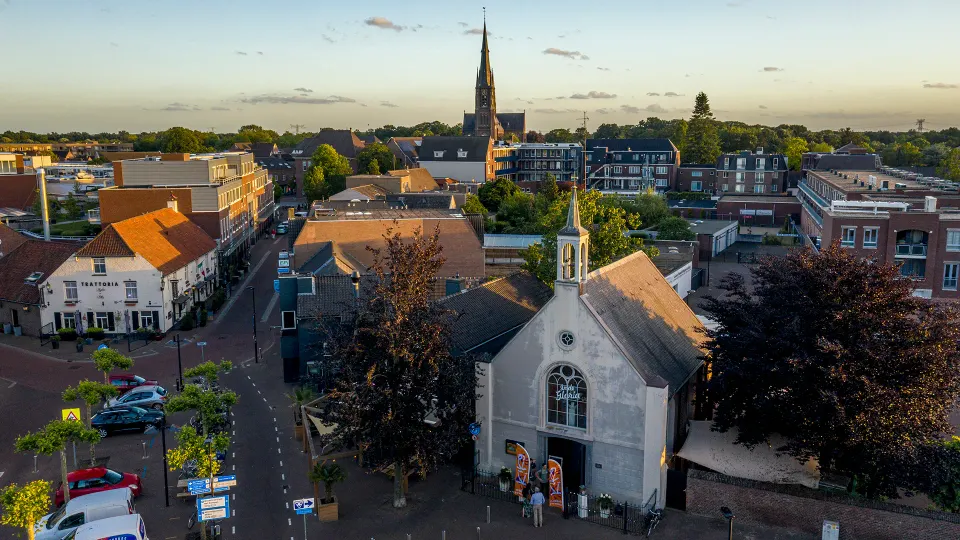
Former Protestant church

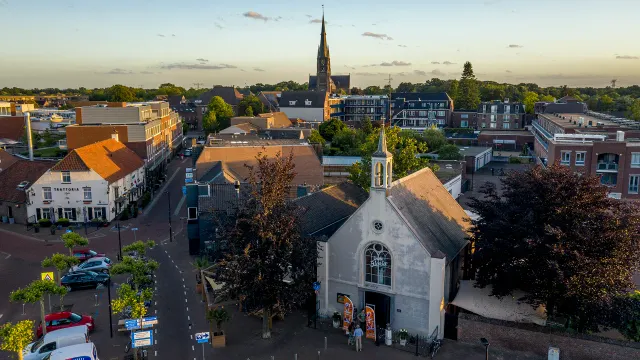
The former Reformed church on Lindestraat – dating from the early 19th century – was built thanks to a grant from Louis Napoleon. Both 1810 and 1825 are cited as the year of construction. Both dates are historically plausible. This support was necessary because, in 1798, the Protestant community had been forced to hand over its church building to the Catholics and did not have enough parishioners to fund a new church itself. With the government’s funding, a new, modest hall church was built.
The church is simple in design: a hall church with a plastered…
The former Reformed church on Lindestraat – dating from the early 19th century – was built thanks to a grant from Louis Napoleon. Both 1810 and 1825 are cited as the year of construction. Both dates are historically plausible. This support was necessary because, in 1798, the Protestant community had been forced to hand over its church building to the Catholics and did not have enough parishioners to fund a new church itself. With the government’s funding, a new, modest hall church was built.
The church is simple in design: a hall church with a plastered façade and characteristic windows featuring attractive cast-iron mullions. The most remarkable feature is found in the chancel: the pulpit dating from 1649, which originated from the old Catholic church used by the Reformed congregation between 1648 and 1798. Due to chronic lack of funds, the building repeatedly fell into disrepair. Repairs were carried out in 1867, 1885, 1938 and 1965. In 1981, the church was fitted with a new organ.
In 2013, the church was decommissioned. The small building was given a socio-cultural purpose under the name ‘In de Gloria’. The interior has been preserved as far as possible, including the historic pulpit. The building is now a municipal monument.