
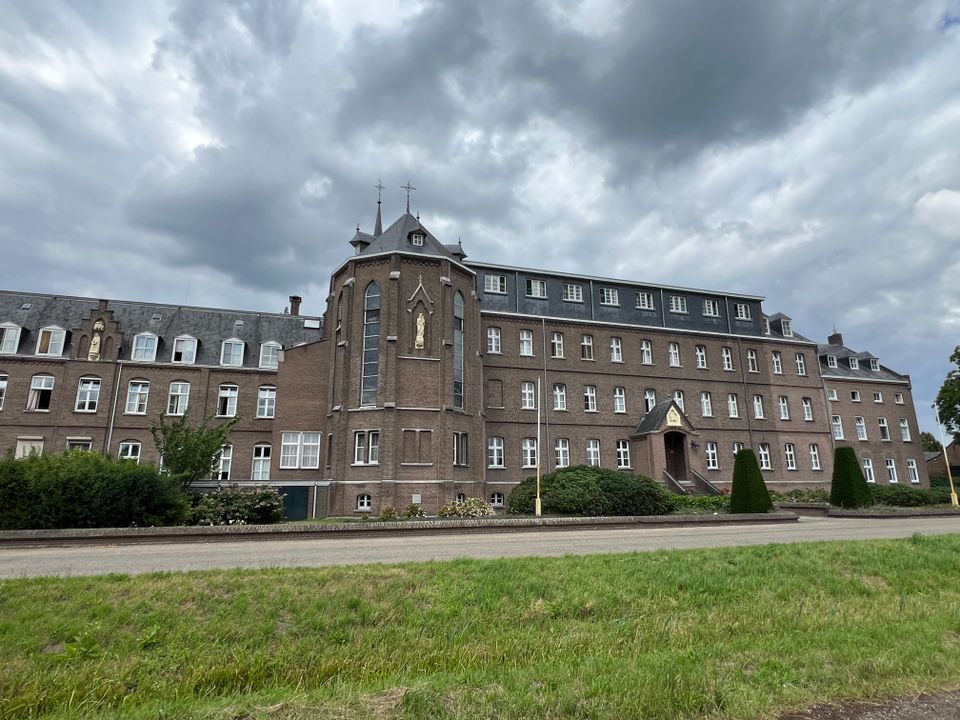
Missieklooster Heilig Bloed
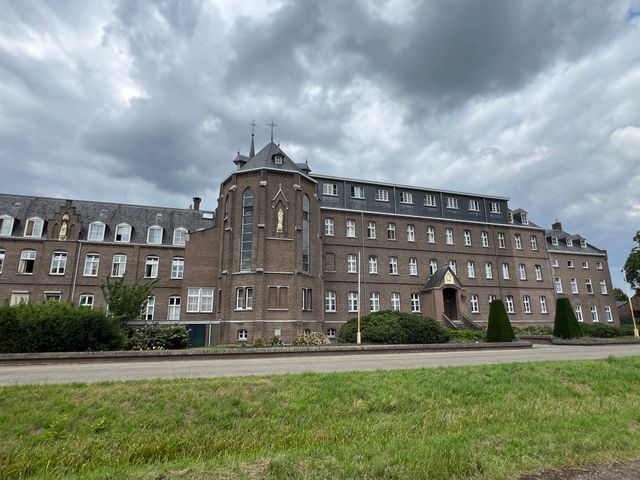
The Holy Blood Mission Convent is a convent of the Missionary Sisters of the Precious Blood located on Kloosterdreef in Aarle-Rixtel. This …
The Holy Blood Mission Convent is a convent of the Missionary Sisters of the Precious Blood located on Kloosterdreef in Aarle-Rixtel. This congregation, the Missionary Sisters of the Precious Blood, was founded in 1885 in Mariannhill, near Durban in South Africa, by the Trappist Franz Pfanner. In 1889, a training convent was started in Kirchherten, Germany, but the Kulturkampf forced the sisters to leave Germany. They therefore moved to a convent in Helden-Panningen, the Saint Joseph Convent, which was permanently occupied in 1901. This convent quickly became too small, and a plot of land with a farm was purchased in Aarle-Rixtel, on which a large convent was built, along with an accompanying farm. The long-gabled farmhouse is therefore older and dates from around 1845. On July 15, 1903, 74 sisters moved into the new convent, and on October 6, 1906, this also became the congregation's new mother house. Until that time, this had been in Mariannhill in South Africa. In 1910, a novitiate wing was added. During the First World War, sick Belgian refugees were nursed there. In 1938, another wing, the Theresia Wing, was added. During the Second World War, the convent once again served as a refuge, this time for evacuees from Aarle-Rixtel. Subsequently, Allied soldiers took up residence. In the 1960s, the chapel was renovated and stained-glass windows by Sister Hadwig Münz were installed. Gradually, the convent became a refuge for returning missionaries. However, just as in the past, it also serves as a training house for women who wish to become nuns. The monastery's generalate moved to Mönchengladbach in 1967 and to Rome in 1970. Since 2008, a restaurant has been located in the monastery's long-gabled farmhouse. The monastery also houses a guesthouse for retreat weekends and similar events. Although the spoken language in the monastery was almost exclusively German for a long time, it has been multilingual since 2003. Since 2024, the language used during prayer times has been Dutch, with occasional English accents. The monastery garden has been partially open to visitors since 2011. It is possible to walk to the Lourdes Grotto, which contains the Sacred Heart prayer room, and light a candle there. The Lourdes Grotto was built in 1907 and restored in 2011.