Sustainable Asten-Peelland cycling tour
The route is executed in a round, so that participants can start at any point. There are places along the route and at the various viewing points where a snack and/or drink can be enjoyed. This bike tour is an initiative of the Energie Port Peelland (EPP) cooperative. We try to help the region to be energy neutral around 2040 by promoting energy saving measures, producing sustainable energy and promoting other sustainable activities.
1. Bell & Peel museum, Asten. www.museumklokenpeel.nl.
Museum Klok & Peel is ambitious about sustainability. They realized amongst others an own soil water project, green sedum roofs, energy saving and LED lighting and optimal insulation facilities. The museum produces its own electricity through its own solar power station with a capacity of 75,000 Wp, making the museum completely self-sufficient on sunny days.
2. Johanna-Elisabeth mill. Wind energy.
The J…
The route is executed in a round, so that participants can start at any point. There are places along the route and at the various viewing points where a snack and/or drink can be enjoyed. This bike tour is an initiative of the Energie Port Peelland (EPP) cooperative. We try to help the region to be energy neutral around 2040 by promoting energy saving measures, producing sustainable energy and promoting other sustainable activities.
1. Bell & Peel museum, Asten. www.museumklokenpeel.nl.
Museum Klok & Peel is ambitious about sustainability. They realized amongst others an own soil water project, green sedum roofs, energy saving and LED lighting and optimal insulation facilities. The museum produces its own electricity through its own solar power station with a capacity of 75,000 Wp, making the museum completely self-sufficient on sunny days.
2. Johanna-Elisabeth mill. Wind energy.
The Johanna-Elisabeth is a round stone mill with a bottle-shaped mill body and is located on the Molenhuisweg in Vlierden in the Dutch province of North Brabant. The mill has the year 1844 on the beard, but it may not have been built until 1848.
3. Flour mill de Volksvriend, Liessel. Wind energy. www.devolksvriend.nl
This belt mill was built in 1903 and is used as a flour mill. In the autumn of 1944, the mill was damaged by war violence.
4. Zonnepark Heusden, Solar Energy. Vegetable grower Aarts, Asten-Heusden www.energyportpeelland.nl/projecten/zonnepark-heusden/2
Energy-neutral operation with zone panels and heat recovery. It was realized by Energy Poort Peelland with 7,364 solar panels, with a capacity of 2,025 kWp. This results in an annual energy yield of 1,900,000 kWh per year, or in other words a reduction of 1,146 tons of Co2 per year or the energy consumption of approximately 600 households per year.
5. Oostenwind mill Asten, Wind energy. www.molendeoostenwind.nl
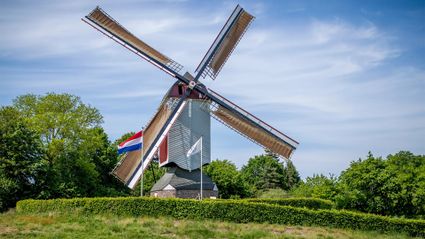
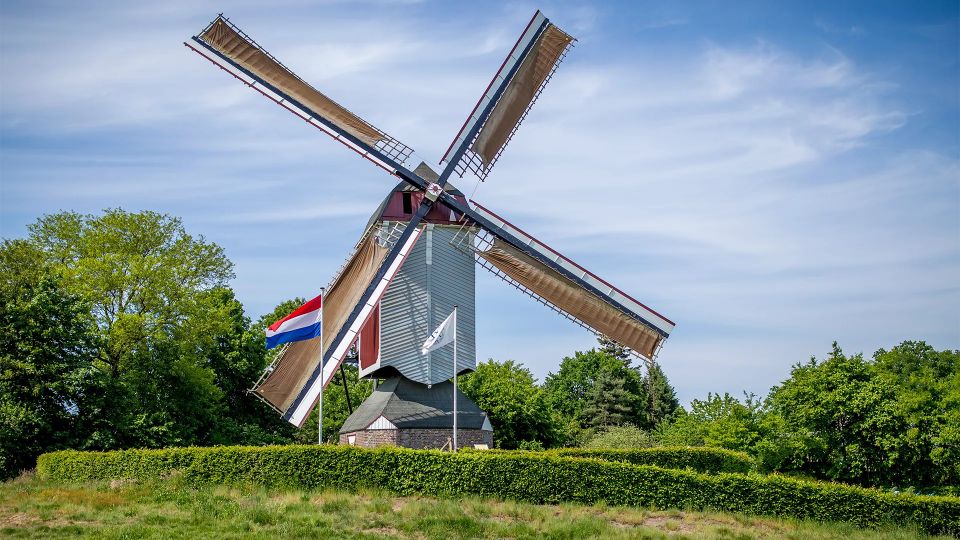
Exactly how old the mill is remains a guess, but it is certain that there has been a mill on the current Molenweg since 1506. Only one beam is left of the at least five centuries old original, the standard. This is the long upright pivot around which the entire upper housing of the mill can be turned to face the wind.
Locations on this route
-
Museum Klok & Peel
Museum Klok & Peel
Museum Klok & Peel
Ostaderstraat 23
5721 WC Asten
Navigate to starting point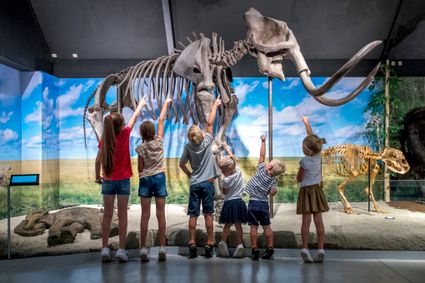
-
Molen Johanna Elisabeth
Molen Johanna Elisabeth
Molen Johanna-Elisabeth
Molenhuisweg 4A
5756 PB Vlierden
-
'De Volksvriend' mill with baker's cottage
'De Volksvriend' mill with baker's cottage
Molen De Volksvriend met bakhuisje
Hoofdstraat 30
5757 AN Liessel
-
Asten Tourist Office opening hours
Asten Tourist Office opening hours
Toeristisch Asten
Kerkstraat 10
5721 GV Asten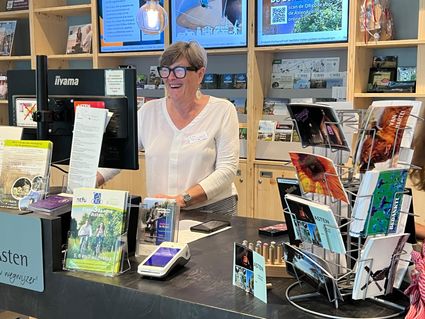
-
-
Museum Klok & Peel
Museum Klok & Peel
Museum Klok & Peel
Ostaderstraat 23
5721 WC Asten
Navigate to endpoint