
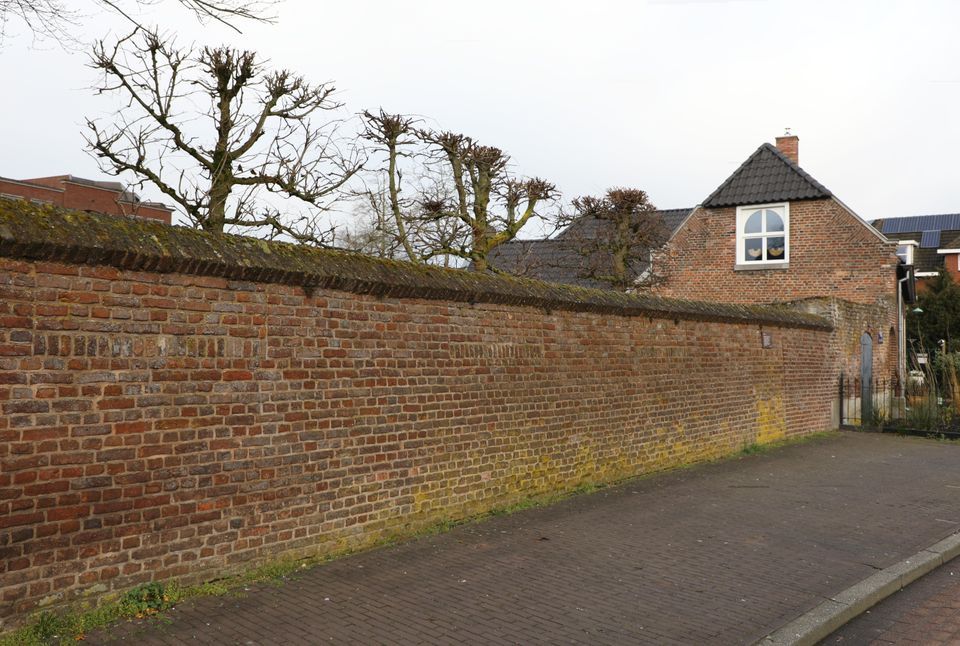
Remains of the barn church wall
Contact
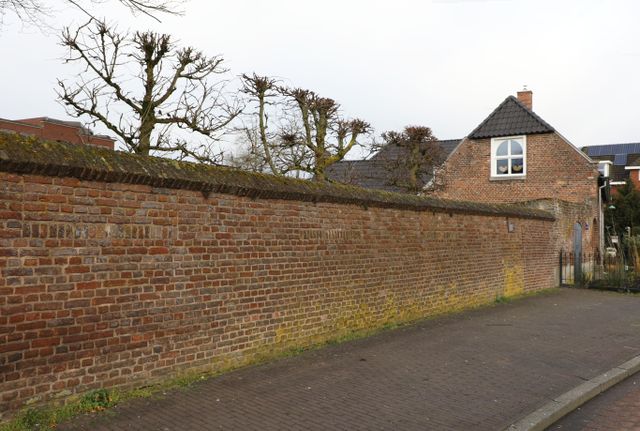
On Lindestraat stands one of Asten’s oldest monuments: the wall of the former barn church of Our Lady of Klein Linden. This wall is now a listed building and overgrown with rare plants. It is the last tangible remnant of a period when the Catholics of Asten were only allowed to practise their faith in secret.
Following the Peace of Münster in 1648, the Catholics were forced to hand over their…
On Lindestraat stands one of Asten’s oldest monuments: the wall of the former barn church of Our Lady of Klein Linden. This wall is now a listed building and overgrown with rare plants. It is the last tangible remnant of a period when the Catholics of Asten were only allowed to practise their faith in secret.
Following the Peace of Münster in 1648, the Catholics were forced to hand over their large parish church on Koningsplein to the Reformed community. Public Catholic churches were then banned, and the Catholics took refuge in a clandestine church in Weert. In 1672, following the French invasion, the rules were relaxed and a barn church was set up in Lindestraat. This was a farmhouse-style building with a thatched roof and wooden window frames, which was not allowed to be recognisable as a church from the outside. Services were held there in secret, often under the supervision of Reformed officials who demanded bribes. A century later, the Catholics were granted permission to renovate the building, which was then fitted with a stone roof, iron window frames and a more spacious layout. In the mid-18th century, Father Petrus Aarts moved in next to the church.
Following the French invasion of 1794, freedom of religion was restored. The Catholics returned to their original church on Koningsplein. The barn church ceased to serve its purpose and was demolished in 1806. Only the wall connecting the church to the vicarage remained standing. In 1807, the Protestant congregation purchased the vicarage along with this wall. The deed of sale stipulated that the window and doors in the wall had to be bricked up — exactly as can still be seen today.
This wall thus constitutes a unique local monument: the last remnant of an 18th-century barn church, a silent witness to over a century of religious tension, a policy of tolerance and clandestine Catholic worship in Asten.