
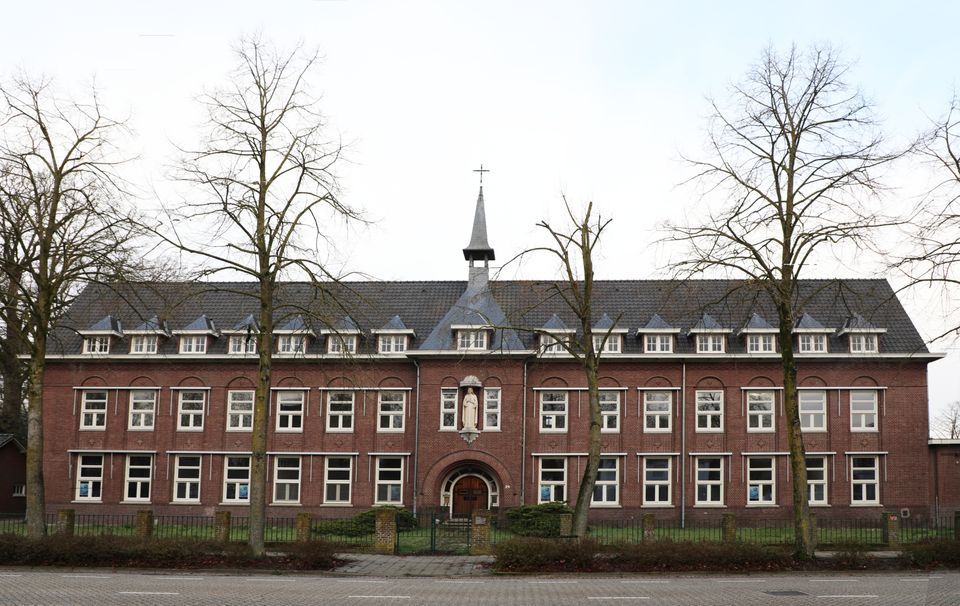
Priests’ Monastery
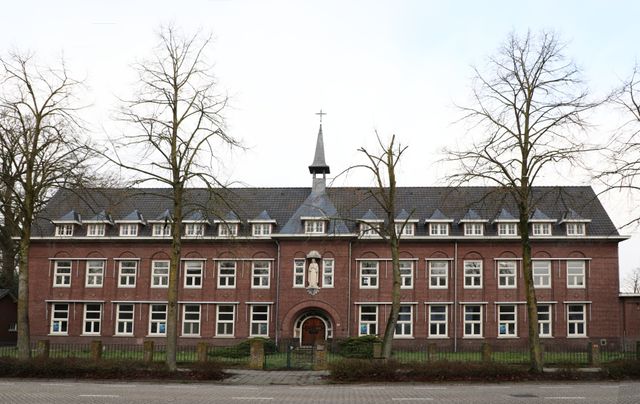
On the site where the friars’ monastery now stands, Mayor Godefridus Marcellus Frencken had a stately villa built in 1865. Around 1850, he laid out a garden, in which he also had a small tea house erected. This tea house still stands in the woods on the hillock, on the left-hand side of the grounds. Frencken, born in 1818, was the son of Jan Georg Frencken, who had also served as mayor of Asten for many years. Until his marriage, Godefridus lived with his parents on the Binnenweg (now Burg. Frenckenstraat). He married Anna Christina Goossens in 1865 at a relatively advanced age and subsequently moved into the villa on Torenstraat (now Wilhelminastraat) which he had built. He lived there until his death in 1907.
From villa to monastery
In 1908, the Pries…
On the site where the friars’ monastery now stands, Mayor Godefridus Marcellus Frencken had a stately villa built in 1865. Around 1850, he laid out a garden, in which he also had a small tea house erected. This tea house still stands in the woods on the hillock, on the left-hand side of the grounds. Frencken, born in 1818, was the son of Jan Georg Frencken, who had also served as mayor of Asten for many years. Until his marriage, Godefridus lived with his parents on the Binnenweg (now Burg. Frenckenstraat). He married Anna Christina Goossens in 1865 at a relatively advanced age and subsequently moved into the villa on Torenstraat (now Wilhelminastraat) which he had built. He lived there until his death in 1907.
From villa to monastery
In 1908, the Priests of the Sacred Heart – a monastic order founded by Léon Gustave Dehon – purchased the property and established themselves in Asten. The order founded a novitiate, a training centre for young men wishing to become priests. Although the novices studied in Asten, the monastery played hardly any role in everyday village life. The priests would occasionally assist at church services and organised an annual Corpus Christi procession in their garden. The main house itself was renovated, extended and converted into a monastery around 1912. Many missionaries set out from this monastic order to countries such as northern Brazil, Scandinavia, South America and the Congo.
In 1929, the old villa was demolished and replaced by the current monastery building, designed by the architect L.J.P. Kooken from Eindhoven. The garden pavilion is the only element that remains today of the original buildings. The new building shows clear influences of the Amsterdam School style, recognisable by its decorative brickwork, wide eaves, heavy wooden window frames with small panes and the distinctive design around the entrance.
War, decline and new uses
In the aftermath of the Second World War, Wilhelminastraat suffered severe damage from bombing raids, and the monastery was also affected. After 1960, the number of vocations declined sharply. The novitiate was closed and the monastery took on a new role as a retirement home for priests returning from the mission fields. In 2019, the last priests left the building. The property was sold to a property developer who intends to repurpose the monastery and the surrounding grounds whilst respecting the history of this listed building.
Interlude: Mayor Frencken
Godefridus Marcellus (Fried) Frencken (1818–1907) served as mayor of Asten and Ommel for no less than 60 years, and later also of Vlierden. He was appointed on 28 December 1843 and took office in early 1944. He remained mayor until his honourable retirement on 1 August 1904. In doing so, he set a national record that can never be broken. Following his diamond jubilee in 1904, the Dutch government set the retirement age for mayors at 70.
Frencken played a major role in the development of Asten. He encouraged the reclamation of the Peel, improved education through new school buildings, and was a co-founder of the new church in Asten, for which he made 65,000 guilders available from the municipal coffers. The introduction of the Helmond–Asten steam tram was also partly realised thanks to his efforts.
His anniversaries were celebrated lavishly in Asten. On his 25th anniversary in 1869, he was presented with a crystal ‘milieu de table’ on a silver stand, a gift from the local people. Frencken was knighted in the Order of Orange-Nassau in 1896 and remained active on the council until a ripe old age. He died in 1907, but his extraordinary term of office remains unique in Dutch history.
Fun fact: Fried Frencken was the great-grandfather of Dries van Agt, who later became Prime Minister of the Netherlands.