
Monastery Missionary Franciscan Sisters
Contact
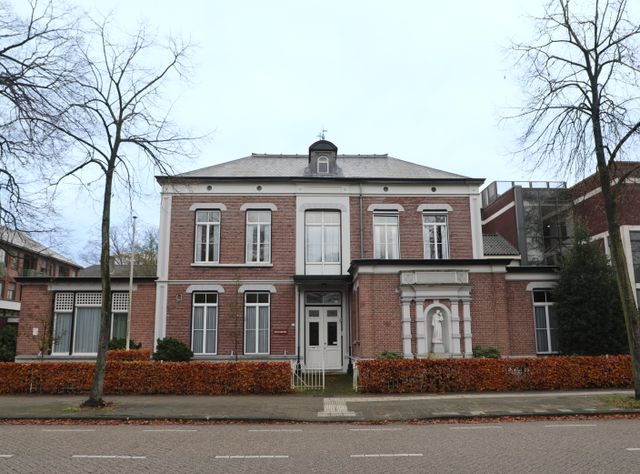
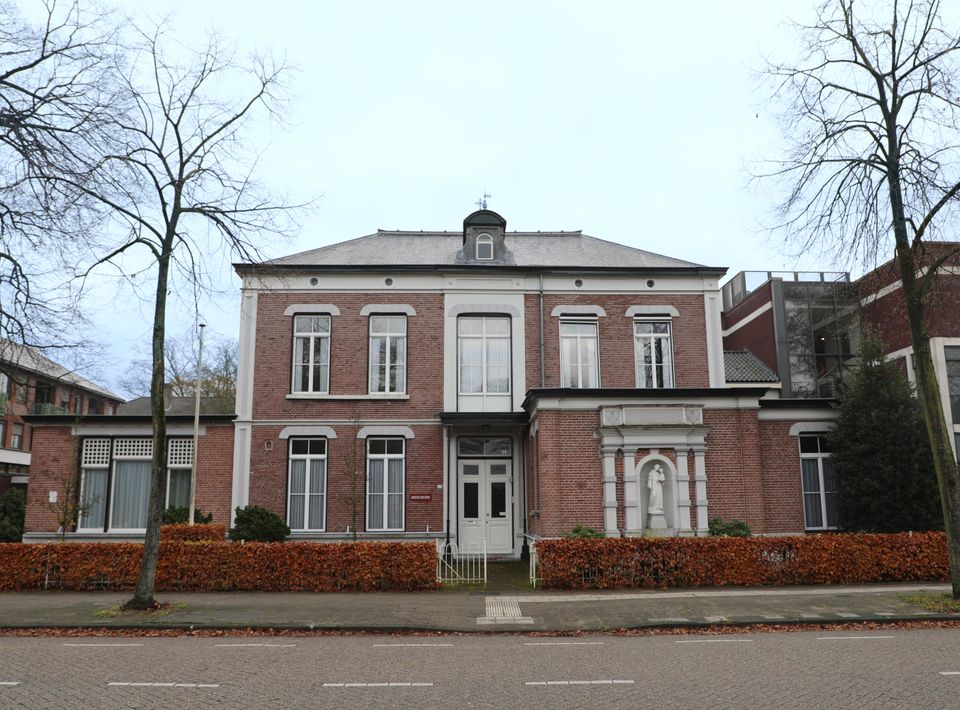
On Wilhelminastraat (formerly Torenstraat) stands the former convent of the Missionary Sisters, housed in a stately villa dating from 1863. In that year, textile manufacturer Jan Hendrik de Ligt had his house built there, with a new textile dye works attached to the side. This replaced the family’s previous factory on Lindestraat. In 1865, he sold the villa and factory to textile manufacturer Antoon Bluijssen, who initially let it out. Later, following Bluijssen’s marriage in 1880, he moved in himself. By this time, the house and its surrounding lands were known as Semper Virens (‘Always Green’).
Following the Bluijssen family’s bankruptcy, …
On Wilhelminastraat (formerly Torenstraat) stands the former convent of the Missionary Sisters, housed in a stately villa dating from 1863. In that year, textile manufacturer Jan Hendrik de Ligt had his house built there, with a new textile dye works attached to the side. This replaced the family’s previous factory on Lindestraat. In 1865, he sold the villa and factory to textile manufacturer Antoon Bluijssen, who initially let it out. Later, following Bluijssen’s marriage in 1880, he moved in himself. By this time, the house and its surrounding lands were known as Semper Virens (‘Always Green’).
Following the Bluijssen family’s bankruptcy, the house was sold in 1909 to a group of French nuns who had fled their country. Architect H. Vorstermans converted the villa into a convent, including a new chapel. The nuns established a boarding school there under the name Maison de famille de Notre Dame and taught French to children from Asten. In 1921, they returned to France. The Franciscan Missionary Sisters of St Anthony, also known as the Boerdonk Sisters, then took over the convent. This order is dedicated to family care, nursing and missionary work in places including Norway, the Congo and Borneo. The statue of St Anthony holding a child in his arms at the front of the building dates from that period.
The convent is also known for a remarkable detail: there is a rare Delft-blue toilet bowl in the building, bearing the inscription ‘Victoria’. This toilet bowl was probably installed in the building by Antoon Bluijssen. Apart from the inscription, this toilet is identical to the one in the royal waiting room at Amsterdam Central Station and to another in the Railway Museum. Research shows that these toilets were manufactured between 1890 and 1904.
Today, the complex serves as a care home and also houses a doctor’s surgery. The building is a listed monument.
The monastery is not open to the public.